Reflective Membrane Systems That Reduce Heat Load
TPO roofing in Choctaw for commercial flat roofs with energy efficiency goals or membrane systems showing seam separation and puncture damage
White thermoplastic polyolefin membrane reflects a significant portion of Oklahoma's direct solar radiation rather than absorbing it, which changes how a building's cooling equipment performs during peak summer months. Gray Feather Roofing installs and repairs TPO roofing on commercial flat roofs across the Oklahoma City area, and the material is increasingly selected on renovations where an older darker membrane has been absorbing heat and adding to interior cooling demand. Building owners who have replaced aged modified bitumen or dark EPDM systems with TPO often see the change reflected in utility bills before they see it on the roof surface—the white membrane is the most visible indicator, but the thermal performance is the functional difference.
TPO installation involves heat-welded seams rather than adhesive bonding, and that distinction matters for long-term performance. Hot-air welding fuses the membrane at the seam into a single continuous layer that is typically stronger than the field membrane itself—adhesive-bonded seams rely on the adhesive maintaining bond through Oklahoma's temperature cycles, which they do not always do reliably over a decade. The membrane is attached to the roof deck either mechanically, using fasteners driven through the insulation into the structural deck, or fully adhered using bonding adhesive. Deck type, insulation board selection, and wind uplift requirements for the specific building determine which attachment method is specified. TPO qualifies for Energy Star rating when installed with minimum reflectance values, which affects eligibility for certain commercial energy incentive programs.
Submit your building details to Gray Feather Roofing for a TPO specification review based on your current roof assembly and energy performance objectives.
What TPO Installation Actually Accomplishes
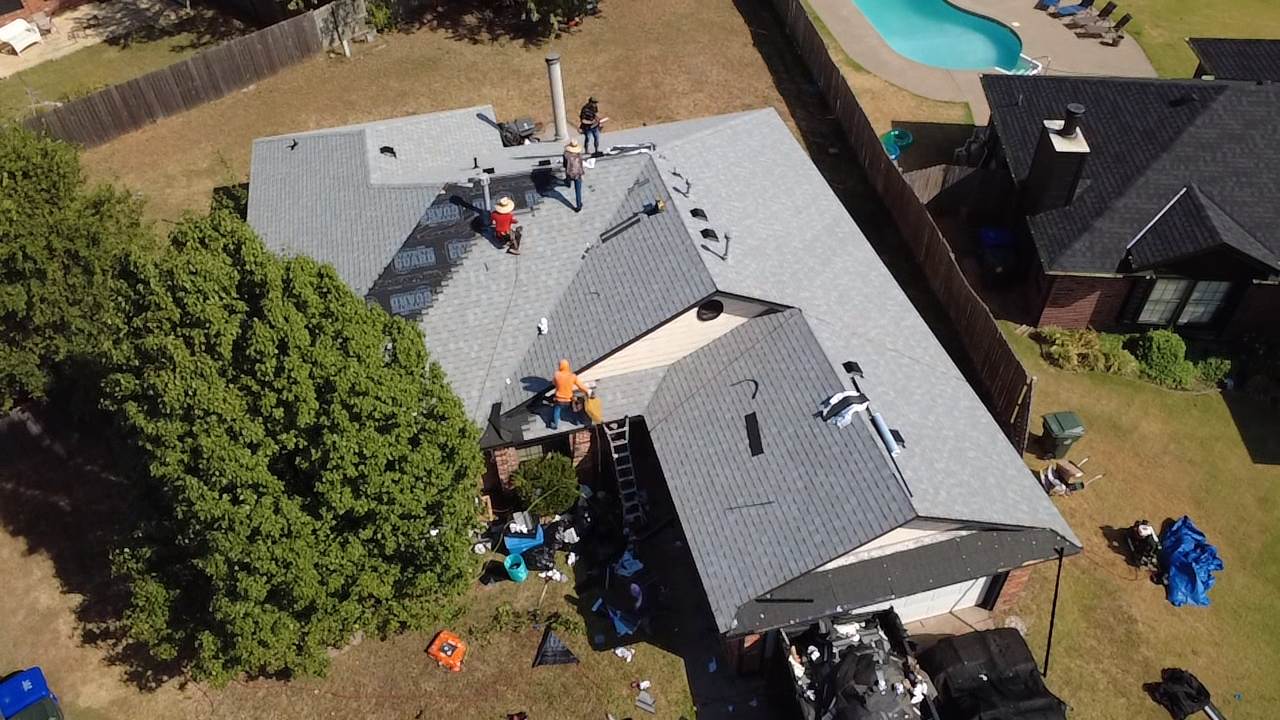
TPO installation begins with deck inspection and insulation evaluation before any membrane is laid. Insulation board must be fastened to manufacturer specification and laid with offset joints to eliminate thermal bridging across seams—a step that affects both the thermal performance of the finished assembly and the membrane warranty eligibility. Penetration flashings are fabricated from the same TPO material and heat-welded to the field membrane, creating a continuous waterproof transition at every pipe, curb, and drain that breaks the surface plane.
After a TPO installation is complete, the roof surface presents as a uniform white or light gray plane with visibly clean weld lines at seams, fully wrapped and welded flashings at penetrations, and properly terminated membrane at parapet edges. Punctures or seam separations that previously allowed water infiltration are replaced by a continuous membrane that you can confirm visually by walking the seam lines—there are no gaps, raised edges, or adhesive voids to probe. TPO's twenty-to-thirty-year service life under normal conditions means a properly installed system on a Choctaw-area commercial building should not require major intervention until well into the next decade.
Manufacturer warranties on TPO systems are tied to installer certification status, which means the warranty terms Gray Feather Roofing can offer are a function of the specific manufacturer's certification program requirements. Warranty coverage typically encompasses material defects and seam integrity, but it excludes damage from traffic, penetrations made after installation, or ponding caused by blocked drains—which is why drain condition is assessed and corrected as part of the installation scope rather than left as a post-project task.
Answers to Frequent TPO Roofing Questions
TPO is one of the more technically specific flat roofing materials, and building owners frequently have detailed questions about how it is installed, how long it lasts, and how it compares to rubber roofing systems. The following addresses the most common concerns.
How does heat-welded seaming differ from adhesive bonding on a flat roof?
Heat welding uses a hot-air gun to melt and fuse overlapping TPO layers into a single continuous bond, while adhesive relies on chemical adhesion that can weaken over time with Oklahoma's freeze-thaw and high-heat cycles—welded seams are generally considered the stronger long-term connection.
What causes TPO membrane punctures, and how are they repaired?
Punctures typically result from foot traffic, dropped tools during HVAC service, or hail impact at concentrations above the membrane's resistance threshold—repairs involve cutting a patch from the same TPO material and heat-welding it over the damaged area with a minimum two-inch overlap on all sides.
Why does insulation board selection affect the TPO warranty?
Manufacturers specify approved insulation board types and thicknesses as a condition of warranty coverage—using unapproved substrates or field-cut insulation without offset joints can disqualify the assembly from full warranty terms regardless of how well the membrane itself is installed.
How does TPO perform against EPDM in Oklahoma's climate conditions?
TPO's reflective surface gives it a thermal performance advantage in Oklahoma's hot summers, while EPDM's single-ply rubber construction offers flexibility in cold snaps—both are durable systems, but the choice depends on whether heat load reduction or cold-weather flexibility is the primary driver for a specific Choctaw-area building.
What maintenance does a TPO roof require after installation?
Annual inspection to check seam integrity, clear drains and scuppers, and confirm flashing terminations are adhered is standard—TPO's surface does not require recoating, but punctures from rooftop equipment service should be repaired promptly before water enters the insulation layer.
Gray Feather Roofing can assess whether TPO is the right fit for your building's roof assembly and provide a detailed installation scope for your specific structure. Call (405) 294-7639 to set up an on-site review of your commercial flat roof.