Siding Assessed and Repaired at the Source
Siding installation and repair in Choctaw for storm-damaged, deteriorating, or failing exterior cladding
Residential construction in the Choctaw area spans several decades of building practice, and the siding on those homes reflects what was standard at the time each one was built—wood lap on older properties, vinyl installed widely through the 1990s, and fiber cement that became common in newer construction where durability under impact was a higher priority. Gray Feather Roofing provides siding installation and repair for residential and commercial properties in Choctaw, working with that range of materials and addressing the damage patterns specific to each. When storm damage creates gaps or deformation in the cladding, the failure is not just cosmetic—exposed sheathing and building wrap underneath begin absorbing moisture immediately, and that process does not pause while a repair is being scheduled.
Every siding project begins with an inspection of existing damage, which on storm-affected properties includes documenting impact points, checking whether fasteners have pulled through the material, and assessing whether the damage pattern qualifies under an insurance claim. Gray Feather Roofing handles insurance claim documentation for storm-related siding damage as part of this process, which matters when the scope of repair is driven by a covered event rather than deferred maintenance. Material selection for installation or replacement is guided by the construction type of the existing structure and the exposure conditions of each elevation.
Arrange an exterior inspection with Gray Feather Roofing to document current siding condition and identify which sections need repair, replacement, or further evaluation for an insurance claim.
How Siding Repair Integrates With the Roofing System
Siding and roofing intersect at several locations on any residential structure—at the rake edge where roof meets gable wall, at dormers, at second-story walls behind gutters, and at any penetration where the roofline meets vertical cladding. Repairs or installations at those intersections require coordination between the two systems so that the flashing, building wrap, and siding terminate in the correct sequence. When siding is installed or repaired without accounting for how it meets the roofline, water can enter the wall cavity at the overlap even when both materials look correct individually.
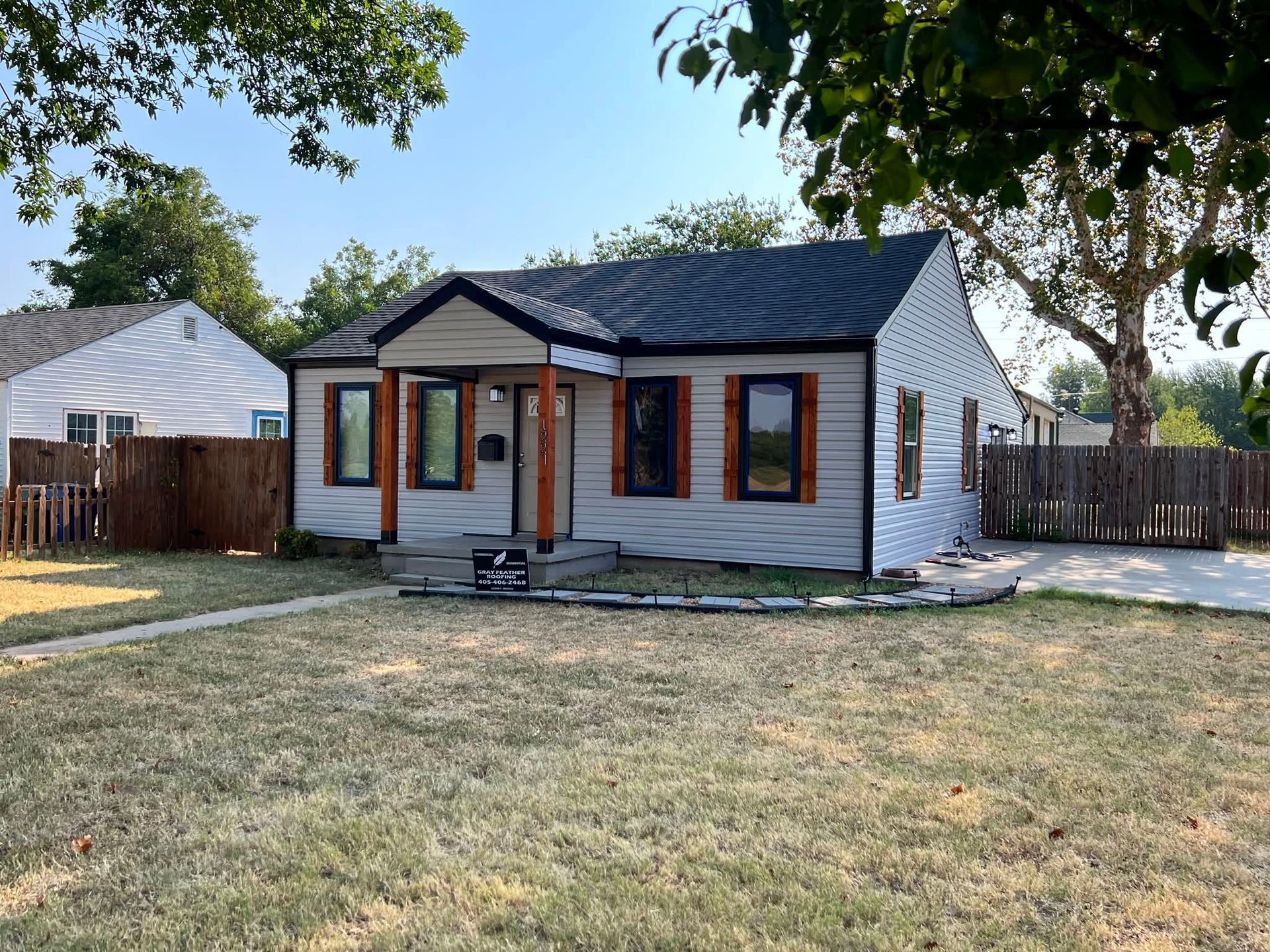
After installation or repair is complete, the siding run is continuous without gaps at joints, fasteners are set correctly for the material type without over-driving, and the connection to adjacent roofing components—flashing, drip edge, and trim—is properly lapped and sealed. On properties where hail has pitted vinyl or fiber cement across a full elevation, replacement of that run produces a surface that is uniform in profile and color rather than patched in sections, which also matters when the work is documented for an insurance settlement.
Material selection depends on more than preference—fiber cement holds paint and resists impact from hail and wind-driven debris more effectively than standard vinyl, but it is heavier and requires different fastener scheduling and substrate preparation; vinyl remains appropriate for applications where the existing structure and sheathing were designed for its lighter load and where impact exposure is lower. The inspection phase establishes which material fits the structural conditions of the specific property before installation begins.
What to Know Before Siding Work Begins
Siding questions in Choctaw often involve storm damage documentation, material comparisons, and how siding work connects to the rest of the exterior system—particularly on properties where roof and siding were damaged in the same event.
How is storm damage to siding documented for an insurance claim?
Inspection identifies the location, pattern, and type of impact damage across each elevation—hail strikes on vinyl or fiber cement produce a characteristic mark pattern that insurers use to assess coverage; Gray Feather Roofing records that documentation as part of the inspection so the claim reflects the actual scope of damage.
What is the correct sequence when both roofing and siding are being repaired after a storm?
Roofing repairs are typically sequenced first because the roof is the primary water barrier for the wall system below it; siding installation or repair follows so that the integration at rakes, eaves, and flashing points is completed correctly against a finished roofline rather than requiring adjustment later.
How does siding fastener installation affect long-term performance?
Vinyl siding requires fasteners driven to leave a small gap that allows the panel to expand and contract with temperature changes; over-driven fasteners lock the panel and cause buckling, while under-driven fasteners allow the panel to rattle and eventually pull off the wall under wind load.
Why does older vinyl siding in Choctaw sometimes crack or break rather than dent on impact?
Vinyl becomes more brittle as it ages and the plasticizers in the material break down, so siding installed twenty or more years ago responds to hail and impact very differently than newer material of the same profile—older sections that crack at impact points require full replacement rather than repair because the surrounding material is also at the end of its serviceability.
What should be inspected behind siding panels that have been storm-damaged?
Sheathing and building wrap beneath damaged panels are checked for moisture infiltration, compression damage, or tears that would allow water to continue entering the wall even after new siding is installed; a repair that covers damaged cladding without addressing compromised sheathing will develop mold and rot in the wall cavity.
Gray Feather Roofing also provides siding services in Del City, Midwest City, and Harrah. Contact Gray Feather Roofing to schedule a full exterior inspection and review current siding condition, storm damage documentation requirements, and material options for your property.