New Construction Roofs Installed on Schedule
Commercial construction roofing in Choctaw for new warehouse, retail, and industrial builds requiring code-compliant installation and warranty documentation
A completed new-construction roof passes inspection on the first review, carries full material and labor warranty documentation, and hands off to the general contractor without delay. Gray Feather Roofing builds new commercial roofs on construction projects across the Oklahoma City area, coordinating directly with general contractor schedules to keep roofing work from becoming the critical path delay. New warehousing, retail construction, and industrial facilities in this region share a common characteristic: the roof is a building envelope component, not an afterthought, and it must perform immediately without a warranty-repair cycle in the first year.
New commercial construction roofing differs from retrofit or replacement work in several ways. The roof assembly is installed against a clean deck without the need to account for existing membrane layers, residual adhesive, or deteriorated insulation. Material selection is made early in the design phase, which allows the installer to coordinate flashing details, penetration locations, and drain positioning with the structural and mechanical trades before concrete is poured or steel is set. Flat and low-slope options—including TPO, EPDM, modified bitumen, and standing seam metal—are evaluated against the building's use, the general contractor's performance specification, and the owner's long-term maintenance expectations. Code compliance and manufacturer installation specifications drive the process, and sign-off documentation is required before the building envelope can be closed.
Discuss your project timeline and specifications with Gray Feather Roofing early in the construction schedule to align roofing scope with the broader build sequence.
What Proper Commercial Construction Roofing Requires
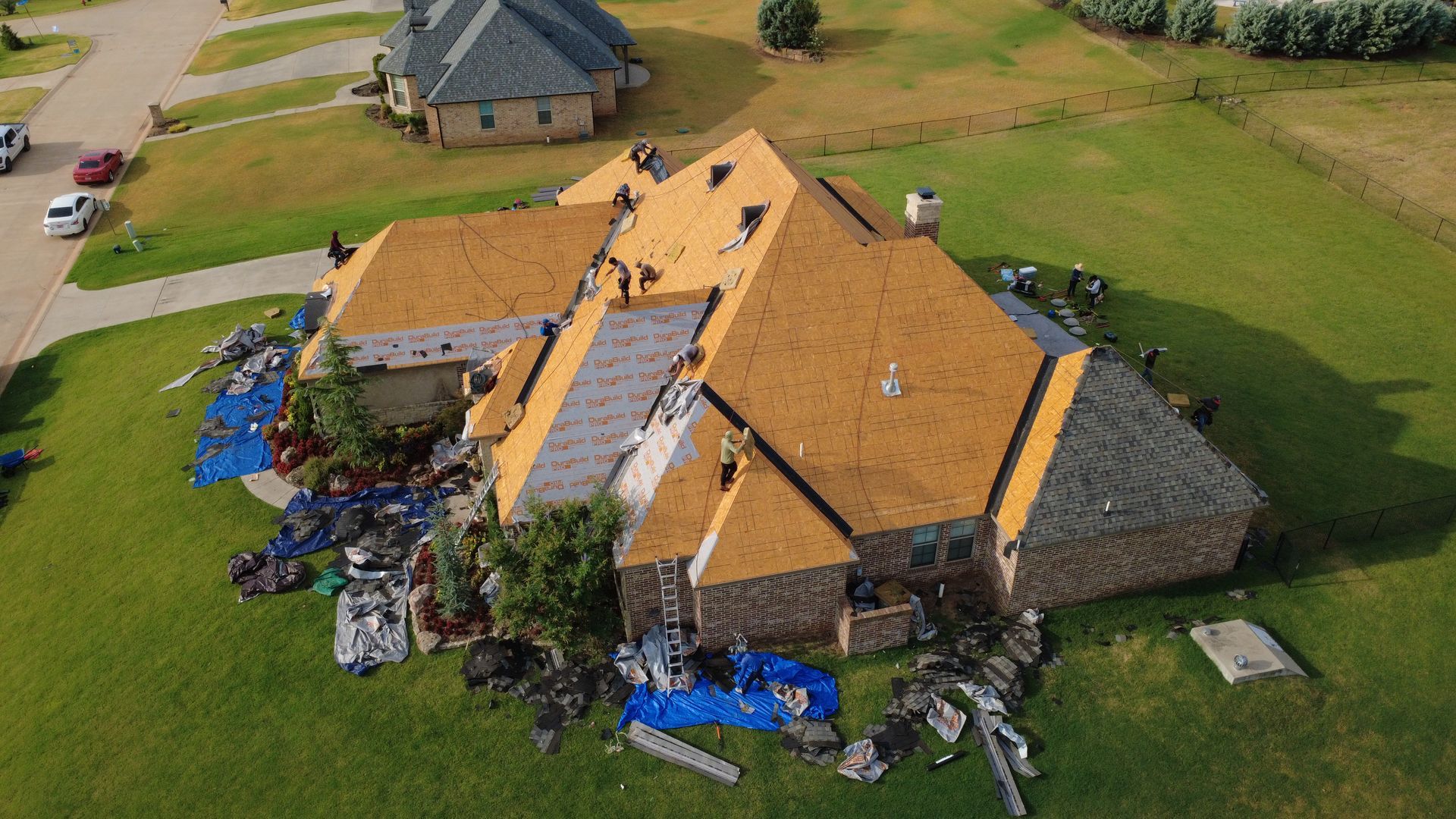
New construction roofing is installed to manufacturer specification from the first layer, which means insulation board type and thickness, membrane attachment method, and flashing detail all follow a documented sequence. Mechanical fastening patterns, seam placement relative to drainage direction, and penetration flashing collar sizing are not field-improvised decisions—they are specified and followed because warranty coverage depends on installation compliance. For Oklahoma builds, the roof assembly also accounts for the region's wind uplift requirements, which affect fastener spacing and membrane attachment method on exposed flat decks.
Once installation is complete, the building has a watertight envelope with clearly documented seam locations, penetration details, and drain configurations that the owner's maintenance team can reference for years. Inspection and sign-off are completed before the general contractor closes out the project, and full warranty paperwork—covering both materials and labor—is transferred to the property owner at handoff. Builder relationships with Gray Feather Roofing are built on schedule compliance, which means showing up when the deck is ready and completing work within the window that keeps other trades moving.
New construction projects also require coordination on items that often get resolved late: roof access hatches, HVAC curb placement, and roof drain tie-ins to the storm system. These details are easier to coordinate during framing than after the deck is installed, so early engagement with the roofing contractor benefits the full project, not just the roofing phase.
Questions Before Starting Your Project
General contractors and building owners often have similar questions about how commercial construction roofing fits into a new build. These answers address the specifics of new construction rather than repair or retrofit scenarios.
What flat roofing materials are available for new commercial construction in the Choctaw area?
TPO, EPDM, modified bitumen, and PVC membranes are all available for new builds, with selection driven by building use, expected foot traffic on the roof, and the project's performance specification.
How does the roofing installation sequence coordinate with other trades on a new build?
Roofing begins after the deck is complete and inspected, and penetration locations for HVAC and plumbing should be finalized before membrane installation begins to avoid field cuts that compromise waterproofing integrity.
Why do new construction roofs require manufacturer-specified installation?
Warranty coverage from material manufacturers is conditional on installation compliance—deviations in fastener pattern, seam width, or insulation attachment method can void coverage on the entire roof assembly.
What wind uplift considerations apply to commercial flat roofs in Oklahoma?
Oklahoma's position in a high-wind corridor means flat roof assemblies must meet specific uplift resistance ratings, which affects the fastening density and membrane attachment method selected at the design phase.
What documentation is included with a new construction roof upon project completion?
Full documentation includes manufacturer material warranty, installer labor warranty, inspection sign-off, and as-built penetration and drain location records for future maintenance reference.
Gray Feather Roofing works directly with general contractors and owners to integrate roofing scope into the construction schedule without creating downstream delays. Call (405) 294-7639 to talk through your project specifications and establish a coordination plan for your build.