Roof Damage That Needs Immediate Attention
Storm Damage Roofing in Choctaw for homes with active leaks, displaced shingles, or hidden decking damage after severe weather
Gray Feather Roofing specializes in storm damage restoration and emergency roofing services for homeowners across the Choctaw area and the broader Oklahoma City metro. Oklahoma's May-through-October hail and wind season produces some of the most concentrated severe weather events in the country, and the damage it leaves behind ranges from visible shingle displacement to moisture intrusion that won't show up until weeks later. When a storm moves through and leaves your roof compromised, the window for preventing secondary interior damage is short.
Same-day emergency tarping stops active water intrusion while a full assessment is arranged—this step alone prevents ceiling materials, insulation, and structural framing from absorbing moisture that compounds the original damage. What separates a thorough storm inspection from a standard roof walk is the attic-level component: Gray Feather Roofing conducts inspections from inside the attic to identify decking damage, moisture saturation, and structural issues that are invisible from the roof surface. Hail strikes that look minor at shingle level frequently cause bruising and granule loss that accelerates deterioration over the following seasons.
Schedule a roof inspection after any hail or wind event to document current conditions before additional weather exposure changes the damage profile.
How Storm Damage Roofing Addresses Hidden and Visible Damage
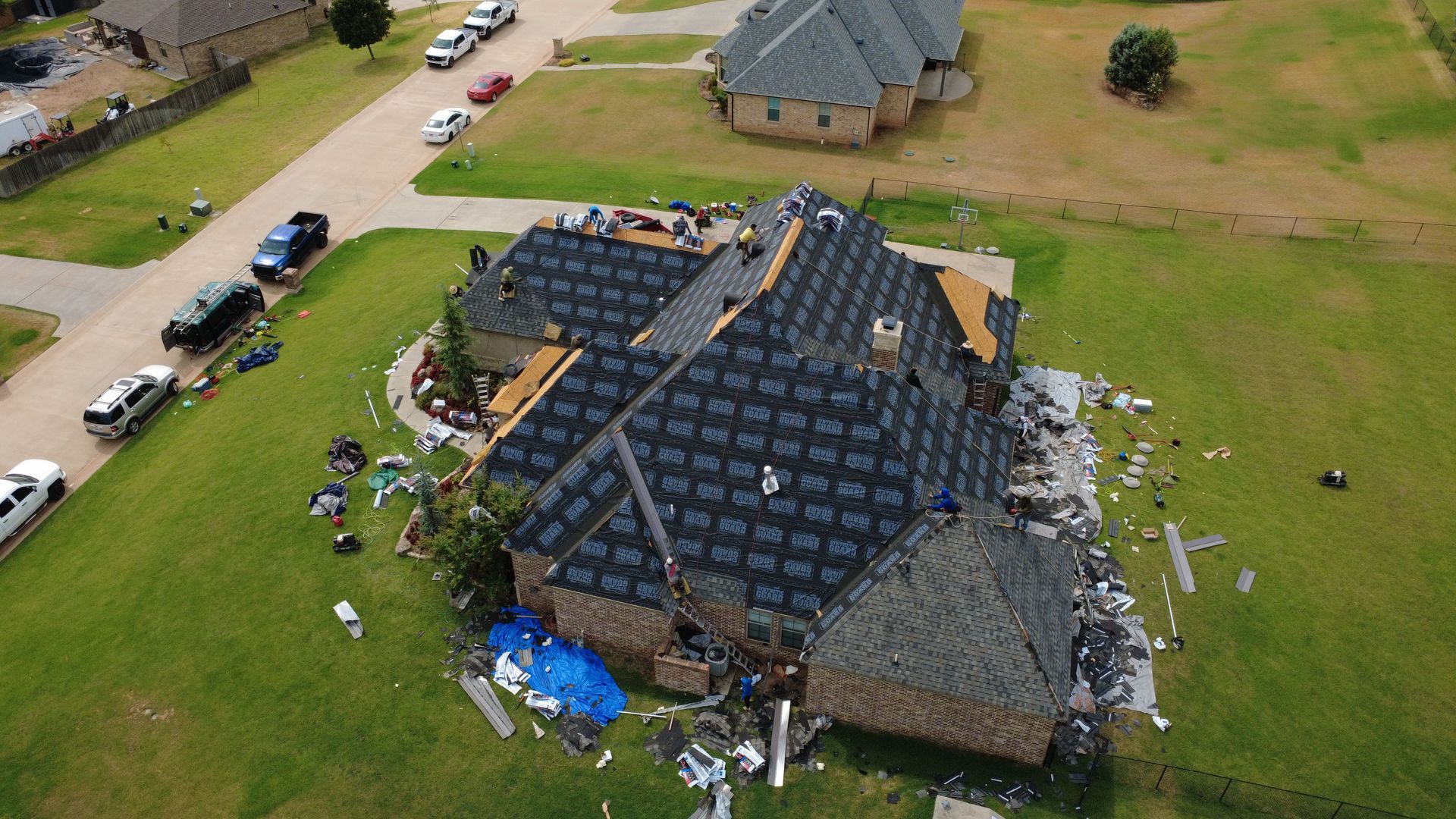
Storm damage work follows a specific sequence that differs from standard roof replacement. After emergency tarping secures the property, the full inspection covers not just the shingle surface but flashing, ridge caps, soffit, fascia, and the attic cavity below the decking. In Oklahoma's climate, high-velocity hail and straight-line wind events often damage multiple systems simultaneously, so a complete scope requires evaluating every layer rather than addressing only what's visible from the ground or a basic surface walk.
Once the inspection is documented, homeowners working with Gray Feather Roofing have access to insurance claim navigation support through a partnership with a public adjuster. This matters because insurance claims for storm damage are assessed against detailed documentation—photo evidence, moisture readings, and decking condition reports—and claims filed without that level of detail are frequently underpaid or partially denied. After the claim is settled and work is authorized, installation follows Tamko Pro Certified standards, which carry defined material and labor warranty terms that are part of the documented project record.
Financing through Foundation Finance is available for homeowners whose insurance settlement leaves a gap or who are managing costs outside of a claim. The scope of replacement versus repair depends on factors including decking condition, the age of the existing shingle system, and whether damage is isolated to specific sections or distributed across the full roof plane—decisions that get made based on inspection findings rather than a predetermined approach.
Common Questions About Storm Damage Roofing
Homeowners in Choctaw and the surrounding Oklahoma City metro often have practical questions about what happens after a storm, how the insurance process works, and what to expect from the repair or replacement scope.
What does an attic-level inspection actually look for?
During an attic inspection, the technician checks decking boards for soft spots, staining, and delamination caused by moisture intrusion, as well as evaluating whether existing ventilation has been disrupted—damage patterns that are undetectable from a standard exterior inspection.
How does the public adjuster partnership work during a claim?
A public adjuster works on behalf of the homeowner—not the insurance carrier—to document damage thoroughly and negotiate the claim scope, which is particularly useful when initial assessor estimates miss secondary damage categories like decking and flashing.
When should emergency tarping be installed after a storm?
Tarping should be in place before the next rain event following confirmed roof damage, since each additional water intrusion cycle pushes moisture deeper into insulation and framing materials and expands the overall repair scope.
Why do hail-damaged roofs sometimes fail years after the storm?
Hail impact bruises shingle mat and strips granules from the surface, which accelerates UV degradation and reduces the shingle's ability to shed water—a process that may not produce visible leaking until the affected area has deteriorated through several additional weather cycles.
What financing options are available if insurance doesn't cover the full replacement cost?
Gray Feather Roofing offers financing through Foundation Finance for homeowners who need to bridge the difference between an insurance settlement and the full project cost, or who are funding repairs independently.
Gray Feather Roofing handles the full process from initial emergency response through final installation, including the insurance documentation steps that most roofing contractors leave to the homeowner. To start with a documented attic-level inspection of your current roof condition, arrange an on-site assessment with the Gray Feather Roofing team.