Storm Damage That Cannot Wait Until Morning
Emergency roof repair in Choctaw for active leaks, wind-driven failures, and hail damage during Oklahoma's storm season
Gray Feather Roofing responds to storm damage, hail strikes, and wind-related roof failures across the Oklahoma City and Choctaw metro with same-day assessment and emergency stabilization. Oklahoma's spring-through-fall storm season compresses damage events into concentrated windows, meaning multiple homes in the same neighborhood often need attention within hours of each other. The difference between a contained repair and a gutted interior ceiling frequently comes down to how quickly a tarp reaches the breach.
The emergency protocol begins with an on-site assessment to identify the full extent of structural exposure—not just the visible entry point. Wind uplift frequently separates flashing at valleys and ridgelines before shingles show visible loss, which means water can be entering the deck in a location several feet from where it appears on the ceiling below. After the entry points are mapped, temporary tarping and mechanical stabilization are applied to stop moisture migration while permanent repair is scheduled. Damage is documented photographically at every stage, which directly supports the insurance claim process and reduces disputes over pre-existing versus storm-caused conditions.
Request a same-day assessment to document damage and stabilize the affected area before interior water damage compounds the repair scope.
How Emergency Roof Response Prevents Secondary Damage
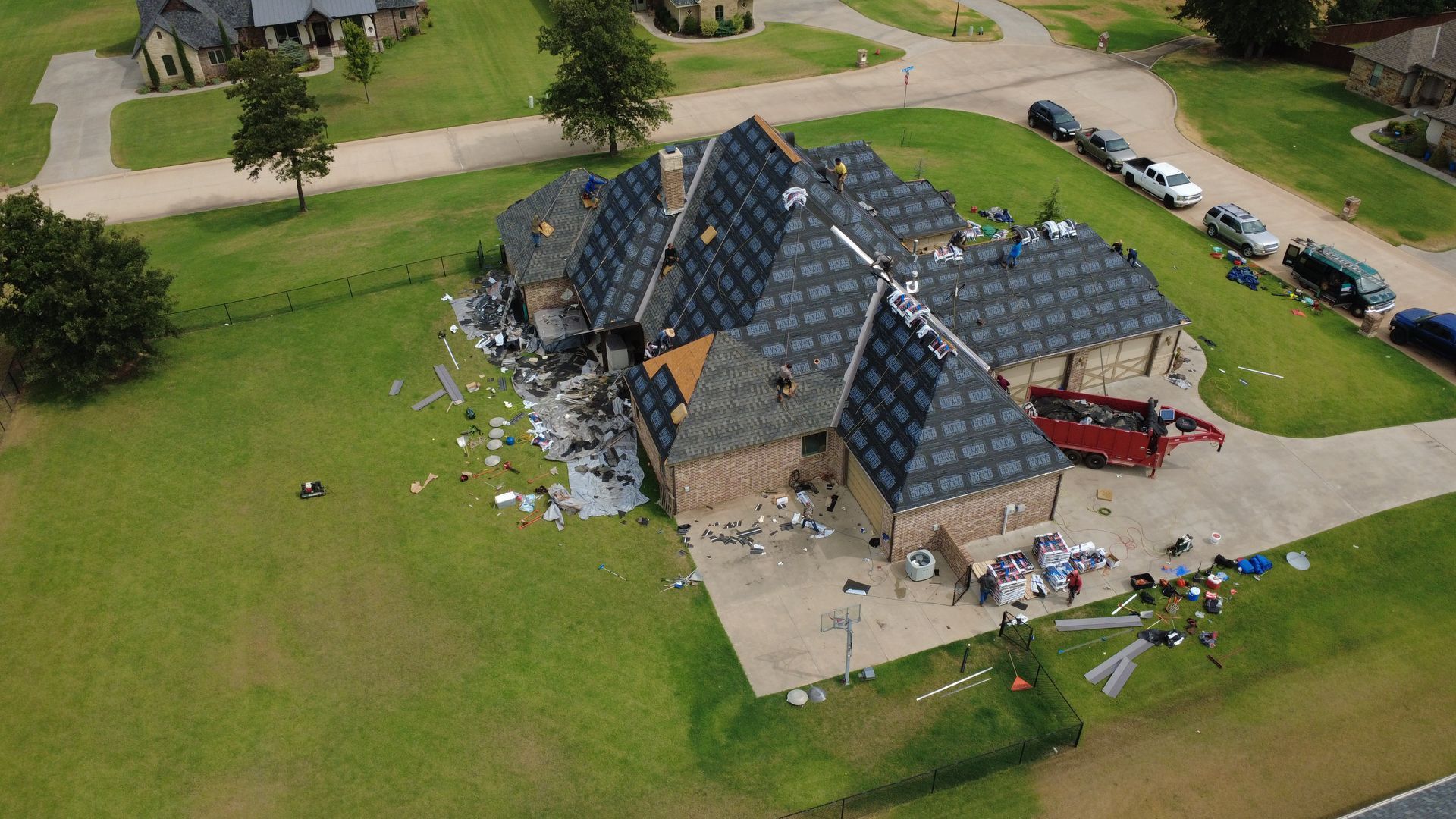
Water that enters through a storm breach does not stop at the first surface it contacts. Within hours of an unaddressed roof failure, moisture migrates through roof decking into insulation, where it becomes trapped and begins promoting mold growth before any visible staining appears on ceilings below. Gray Feather Roofing's emergency process prioritizes identifying moisture pathways rather than simply covering the most obvious opening, because tarping a single impact zone while leaving adjacent flashing failures unaddressed extends the damage window rather than closing it.
Once stabilization is complete, you will have a clear record of what the roof looked like immediately post-storm—a detail that matters when adjusters assess the claim days or weeks later. Interior ceiling stains stop spreading, and the attic space returns to a condition where permanent repair materials can be correctly evaluated for compatibility with the existing deck and underlayment.
The documentation package produced during emergency response—photographs, written damage notes, material condition records—follows the job through to permanent repair scheduling and serves as the baseline for insurance adjuster review. Not all storm damage qualifies equally under every policy, and documentation captured immediately after the event carries significantly more weight than photos taken after a delay.
Common Questions About Emergency Roof Repair
Oklahoma homeowners often have immediate questions after a storm event, particularly when it is unclear whether damage is minor or structurally significant. The answers below address the most common concerns about the emergency response process.
What does same-day emergency roof assessment actually involve?
A technician inspects both the exterior roof surface and accessible attic space to identify all active breach points, documents findings photographically, and applies temporary tarping or mechanical fastening to stop active water entry before permanent repair is scheduled.
How do I know if my roof damage requires emergency response or can wait for a standard appointment?
Visible daylight through the deck, active interior dripping during rain, displaced or missing shingles over more than a few square feet, or exposed underlayment following a high-wind event all indicate conditions where waiting increases repair cost and interior damage risk.
Why does emergency tarping matter for insurance claims in Choctaw?
Oklahoma insurers expect policyholders to mitigate damage after a storm event, and documented tarping done promptly demonstrates that obligation was met—which reduces the risk of claim disputes over damage that occurred after the initial event.
What causes roof failures during Oklahoma storms specifically?
Hail impact degrades shingle granule coverage and exposes the asphalt mat to UV deterioration, while straight-line wind events create uplift pressure that lifts shingle tabs and separates flashing seals—both of which can appear minor on the surface while allowing significant water intrusion below.
How is permanent repair scheduled after emergency stabilization?
Following the assessment and stabilization visit, a repair scope is prepared based on documented damage, and permanent scheduling is coordinated around material availability and weather windows suitable for proper installation.
Gray Feather Roofing handles both the emergency stabilization and the complete documentation needed to move a storm damage claim forward without delay—contact the office directly at (405) 294-7639 to arrange a same-day damage assessment.