Full Replacement Done Without Cutting Corners
Roof replacement in Choctaw for homes with storm-accumulated damage, age-related failure, or systems beyond repair
A roof that has absorbed multiple hail seasons without documented assessment often reaches replacement threshold through accumulated damage rather than a single catastrophic event—granule loss compounds, flashing lifts incrementally, and decking begins to soften in low-drainage areas before any interior leak appears. Gray Feather Roofing provides complete roof replacement for residential properties in Choctaw, covering the full scope from attic and exterior inspection through old roof removal, structural repair, new system installation, ventilation verification, and insurance coordination. The sequence matters: starting with replacement without a decking assessment means discovering structural problems mid-project, which changes both scope and cost in ways that could have been anticipated upfront.
Replacement timing in Choctaw is often tied to the post-hail season window. Projects that begin after the May-through-October storm period allow for accurate storm damage documentation before insurance claim submission deadlines, and scheduling availability tends to open up after the peak repair demand of summer subsides. Material selection during replacement covers shingle grade options and metal panel systems, with each choice evaluated against the property's slope, ventilation configuration, and the homeowner's priorities between upfront cost and long-cycle replacement intervals.
Request a full replacement assessment to establish existing damage extent, material options, and a documented scope before any work begins.
What the Replacement Process Actually Accomplishes
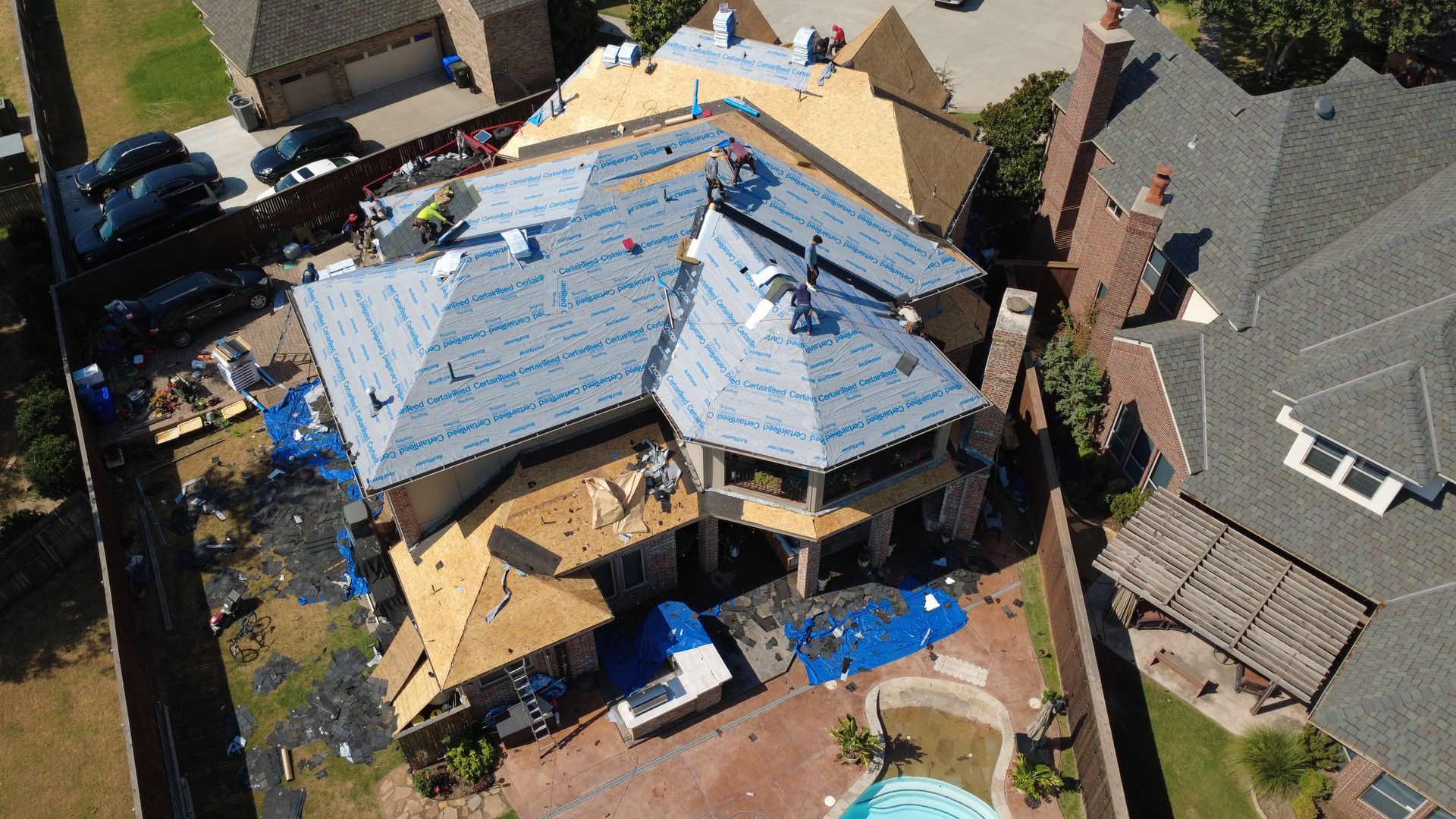
Roof replacement at Gray Feather Roofing begins with a two-point inspection: exterior shingle and flashing condition, followed by attic-level assessment of decking integrity, moisture staining, and ventilation airflow. Skipping the attic component is a common shortcut that leaves degraded decking boards under new shingles—a condition that accelerates fastener pullout and shortens the new system's effective life. Structural repairs identified during inspection are addressed before new material goes down, not patched over.
After replacement is complete, the observable differences are specific: consistent shingle coursing across all roof planes, sealed flashing at every penetration and transition, gutters clear of the granule debris shed during tear-off, and attic ventilation verified to meet the installed shingle system's requirements. Homes that were showing ceiling stains from slow leaks will have those intrusion paths closed at the source rather than cosmetically addressed from inside.
Insurance coordination on replacement projects involves documenting damage indicators in the format adjusters reference during claim review—hail impact density, wind uplift patterns, flashing failure points—rather than submitting a general damage description. Material and labor warranties are documented separately and reviewed before the project closes, since each carries different coverage terms, claim processes, and duration limits that affect how you'd handle any post-installation issue.
Answers to Frequent Replacement Questions
Roof replacement generates more questions than most home projects because the costs are significant and the variables—insurance, materials, structural conditions—interact in ways that aren't always obvious. The following addresses what Choctaw homeowners most commonly ask.
How do I know if my roof needs replacement rather than repair?
Widespread decking softness, shingles that have lost granule coverage across multiple planes, and a system that has been repaired repeatedly without resolving recurring leaks are the clearest indicators that repair is no longer the cost-effective path.
What is the best time of year to replace a roof in Oklahoma?
Post-storm-season scheduling—typically late October through early spring—allows for accurate insurance documentation after the hail window closes and tends to align with contractor availability before spring storm season restarts.
Why does ventilation get verified during replacement?
Shingle manufacturer warranties require minimum ventilation ratios to remain valid—installing new shingles over an under-ventilated attic voids the material warranty and accelerates aging from heat accumulation, which means you'd be paying replacement costs again sooner than the product is rated for.
How does Gray Feather Roofing handle the insurance claim process for replacement?
The assessment documents specific, measurable damage indicators—impact marks, granule displacement patterns, flashing separation—that align with what insurance adjusters use to evaluate storm-related claims in the Choctaw area.
What does old roof removal involve and why does it matter?
Tearing off existing shingles and underlayment exposes the full decking surface for inspection, allows identification of wet or damaged boards before new material is installed, and ensures the new system starts on a structurally sound base rather than layered over hidden problems.
Gray Feather Roofing manages roof replacement projects from initial assessment through final documentation, including the insurance coordination steps that affect how much of the project cost gets covered. Reach out to schedule a detailed inspection and get an accurate picture of your home's replacement scope.