Leaks Found at the Source, Not Guessed At
Roof repair in Choctaw for active leaks, storm damage, and age-related failures requiring accurate diagnostics
Water staining on a ceiling doesn't tell you where the roof is failing—it tells you where water arrived after traveling along decking, rafters, or insulation from an entry point that may be several feet away. Gray Feather Roofing identifies and repairs roof leaks, storm damage, and age-related failures for residential properties in Choctaw using a diagnostic process that starts in the attic rather than on the shingles. Moisture mapping, stain pattern analysis, and structural integrity checks at the attic level reveal the actual entry point, which is often at a flashing seam, a cracked pipe boot, or a shingle lift that wasn't visible from the roof surface during a standard walk.
Repair calls spike sharply in Choctaw between May and October, when hail and wind events create damage that ranges from obvious shingle loss to subtle granule displacement that allows slow water infiltration without producing an immediate visible leak. Catching and repairing damage in that window—before winter freeze-thaw cycles widen existing cracks—consistently limits the cost and scope of what would otherwise become a larger structural issue by spring. Repair scopes are defined by the actual damage found, not defaulted to full replacement when the underlying system is structurally sound and the damage is localized.
Set up a diagnostic inspection to trace the leak source and establish what the repair scope actually involves before any work begins.
The Difference Between Patching and Actual Repair
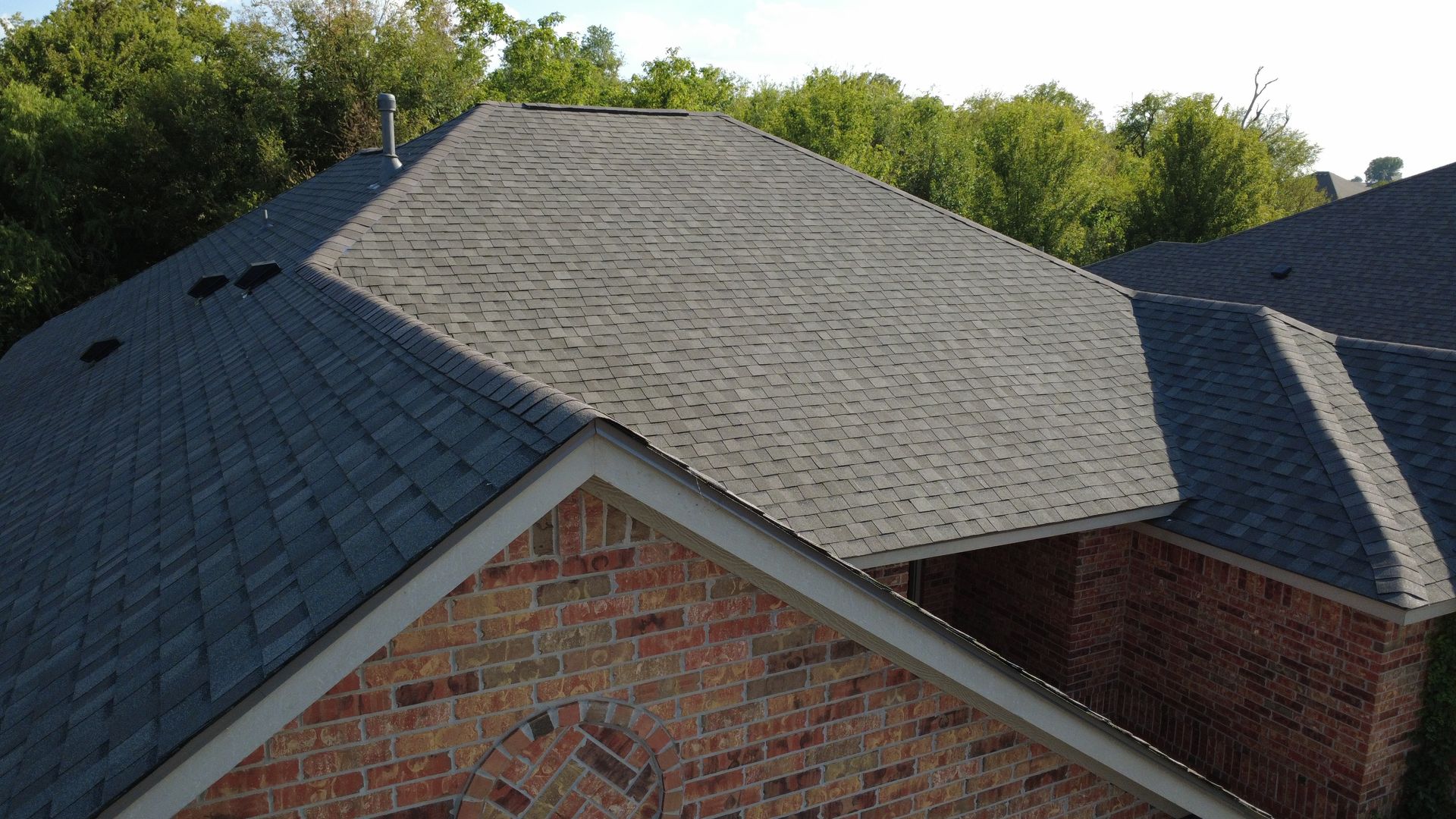
Surface-only repair—replacing visible shingles without checking the decking beneath or resealing adjacent flashing—addresses the symptom rather than the failure mechanism. The diagnostic process at Gray Feather Roofing covers attic moisture assessment, staining pattern location, decking probe at suspicious areas, and exterior inspection of shingles, flashing, valleys, and penetration boots. Each of those components can fail independently, and a repair that addresses only one without checking the others will often produce a repeat call within the same season.
After a properly executed repair, the specific changes are observable: the interior staining pattern stops expanding during rain events, attic moisture readings return to ambient levels, and the repaired flashing or shingle area shows no gap, lift, or exposed sealant at the edges. Homeowners frequently notice the difference between a repair that holds through subsequent storms and one that requires repeated follow-up—the distinguishing factor is almost always whether the attic-level diagnostic was completed before the exterior work began.
Repair work includes shingle replacement at damaged sections, flashing reseal or replacement at failed transitions, ventilation correction when airflow deficiencies are contributing to moisture accumulation, and pipe boot replacement when cracked or separated collars are the confirmed entry point. Each repair component is scoped to what the diagnostic reveals rather than applied as a standard package regardless of what the inspection shows.
What Property Owners Usually Ask About Roof Repair
Repair questions in Choctaw most often center on whether a problem needs immediate attention, whether insurance applies, and how to distinguish a repairable condition from one that points toward replacement. The answers below reflect the specific diagnostic and decision factors that apply in this region.
How do I know if roof damage needs immediate repair or can wait?
Active water intrusion into the attic or interior, missing shingles that expose underlayment directly to weather, and separated flashing at chimneys or vents all warrant prompt attention—delay allows water to reach decking and framing, which significantly expands the repair scope.
Why does attic inspection change the repair scope?
Attic moisture staining reveals the travel path water has taken, which identifies the actual entry point rather than the location where damage appears most visible on the exterior—without that information, exterior repairs frequently miss the source.
What repair approach is used when hail damage is the cause?
Hail damage repair addresses the specific shingle failure mode—bruised mat, cracked tabs, or granule displacement zones—and includes adjacent course inspection to confirm that surrounding shingles are still bonded and weather-resistant, not just visually intact.
When should I consider repair versus full replacement in Choctaw?
Repair makes sense when damage is localized, the surrounding shingle system has remaining service life, and the decking is structurally sound—when those conditions aren't met, continuing to repair compounds cost without extending the roof's functional lifespan.
How does Gray Feather Roofing document storm damage for insurance purposes during a repair call?
The inspection records specific indicators—impact mark density, shingle failure patterns, flashing condition—that align with the documentation format insurance adjusters use when evaluating whether damage qualifies as storm-related, which affects how the repair or replacement claim is processed.
Gray Feather Roofing approaches every repair call with a diagnostic-first process that identifies the actual failure source before determining the correct repair scope. Call (405) 294-7639 to schedule an inspection and get a repair estimate based on what your roof is actually showing.