Coatings That Add Measurable Life to Aging Roofs
Roof coatings in Choctaw for asphalt systems showing UV degradation, granule loss, or mid-life wear before replacement becomes necessary
A roof coating applied to a structurally sound but aging asphalt system works through a different mechanism than a patch or overlay—it establishes a continuous waterproofing membrane and reflective surface that slows the specific deterioration pattern Oklahoma summers accelerate. Gray Feather Roofing applies protective coatings as a deliberate mid-life intervention for roofs that have lost granule coverage, show surface oxidation, or are approaching the upper third of their rated lifespan but do not yet require full replacement. The observable result after application is a uniform, sealed surface that reduces solar heat gain and closes the micro-cracks and surface porosity that develop as asphalt ages under UV load.
Oklahoma's climate creates a specific deterioration sequence for asphalt shingles: intense UV exposure during summer months breaks down the asphalt binder, granule adhesion weakens, and the mat beneath becomes progressively more brittle and porous. Coating application interrupts this cycle by placing a UV-resistant, waterproof layer over the existing surface before the underlying mat reaches the threshold where moisture penetration begins. The application process involves surface cleaning and debris removal, primer application where substrate conditions require it, and topcoat application in a controlled thickness that allows proper adhesion and cure. Reflective coatings also reduce attic thermal load, which affects cooling system demand during months when both roof surface temperatures and ambient temperatures peak simultaneously.
Request a coating eligibility assessment to determine whether your current roof condition qualifies for coating as an alternative to near-term replacement.
What Roof Coating Actually Accomplishes
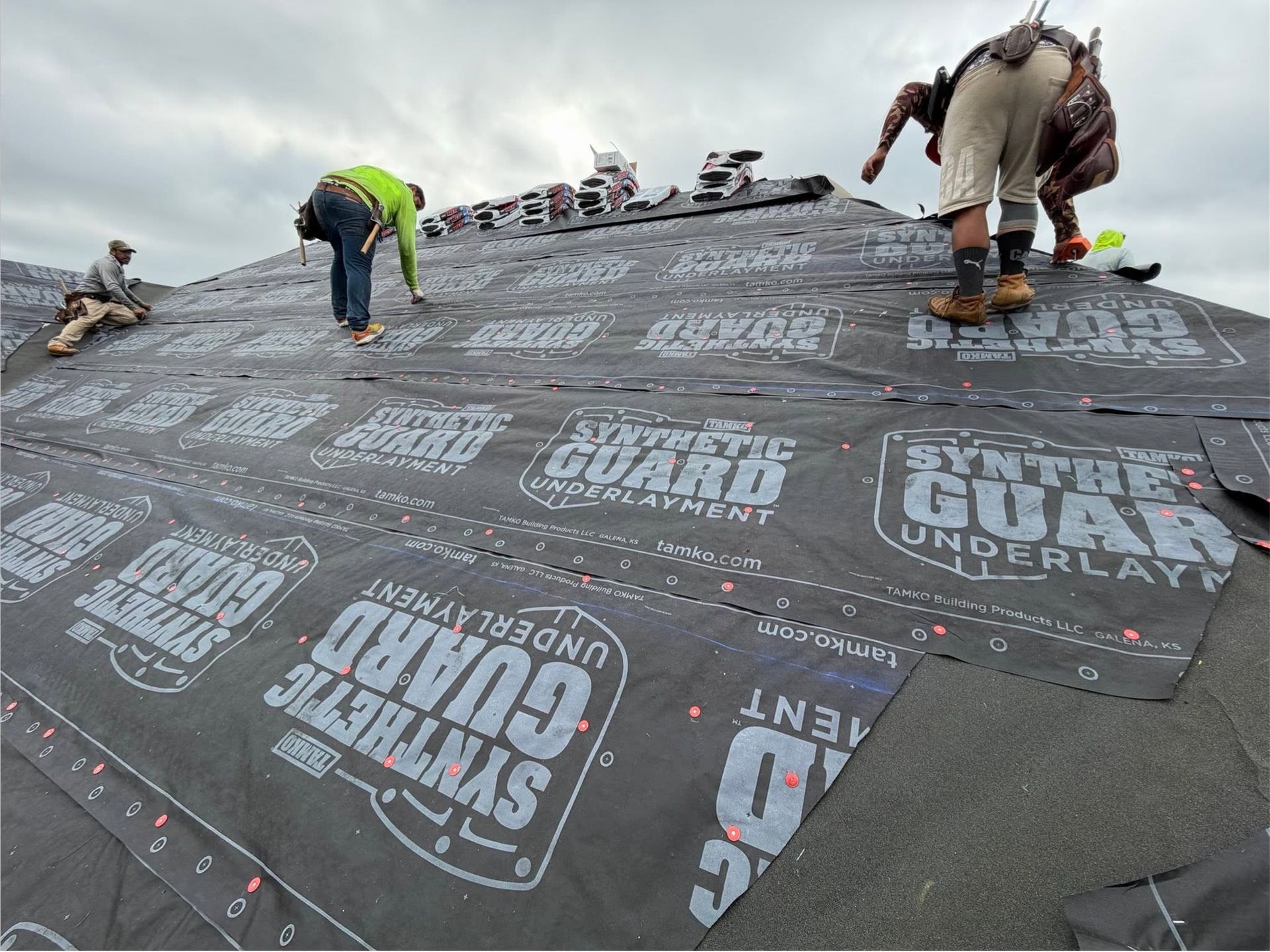
Coating is not a universal solution—it performs correctly only when applied to a roof that retains structural integrity at the deck and substrate level. Gray Feather Roofing's pre-application process evaluates the substrate for active moisture, delamination, and surface adhesion suitability, because applying a topcoat over a compromised deck traps existing moisture and accelerates the deterioration it is meant to prevent. When the substrate qualifies, coating extends the serviceable period of the existing system by protecting the material that remains viable rather than replacing it prematurely.
After coating is complete and cured, the roof surface reflects a measurable portion of solar radiation rather than absorbing it, which reduces peak attic temperatures during the afternoon hours when Oklahoma summer heat is most intense. The surface also presents a continuous, sealed appearance—granule voids, surface cracks, and oxidation patterns visible before application are covered by the topcoat layer. From a maintenance standpoint, the sealed surface is easier to inspect because anomalies like punctures or edge lifting are visually distinct against the uniform coating field.
Coating is most cost-effective when applied before the underlying system reaches the point where deck repair or sheathing replacement becomes necessary alongside the surface treatment. Roofs where granule loss is severe enough to expose the mat in multiple field areas, or where deck movement has created surface irregularity, may require repair work prior to coating or may not be suitable candidates at all—an evaluation determines which category applies before material costs are committed.
What Property Owners Usually Ask
Homeowners in Choctaw considering roof coatings typically want to understand the longevity of the coating itself, what conditions disqualify a roof from treatment, and how the process compares in cost to replacement.
How long does a roof coating last in Oklahoma weather conditions?
Coating lifespan depends on product type, application thickness, and the UV and thermal cycling the surface experiences—in Oklahoma's climate, quality elastomeric topcoats applied at correct film thickness typically require recoat evaluation within several years, with the substrate remaining protected throughout that period.
What surface preparation is required before coating application?
The existing roof surface must be thoroughly cleaned of algae, debris, and loose granules, and any open penetrations or flashing gaps must be sealed prior to topcoat application—primer is applied where surface porosity or adhesion testing indicates it is necessary for proper bonding.
Why does coating in Choctaw specifically address energy performance?
Choctaw's summer peak temperatures create sustained high-angle solar loading on low-slope and standard-pitch roofs, and reflective coatings reduce the surface temperature differential between coated and uncoated sections, which directly reduces heat transfer into the attic space below.
What makes a roof ineligible for coating?
Active moisture in the deck, significant sheathing deterioration, structural movement at the deck plane, or widespread granule loss exposing the mat across field areas are conditions that require repair or replacement before coating can be applied correctly.
How does roof coating compare in cost to full replacement?
Coating is a fraction of full replacement cost when the substrate qualifies, making it appropriate as a mid-life maintenance investment rather than an emergency solution—the calculation changes when deck repair costs are added, which is why substrate evaluation precedes any coating recommendation.
Gray Feather Roofing evaluates substrate condition before recommending coating as an appropriate solution—call (405) 294-7639 to arrange a surface assessment and determine whether your roof qualifies for coating treatment.