
Waterproofing Built for Repeated Storm Exposure
Roof waterproofing near Choctaw for homes with moisture intrusion points following hail events, wind damage, or seasonal storm accumulation
Oklahoma's spring-through-fall storm season creates a concentrated window—often three to six months—during which hail impact, wind-driven rain, and debris accumulation progressively compromise roof waterproofing integrity. Granule displacement from hail strikes, flashing separation from wind uplift, and sealant breakdown at penetrations each represent distinct moisture entry pathways that compound when they occur in the same storm event. Gray Feather Roofing addresses waterproofing as a system-level concern in Choctaw, beginning with attic and substrate inspection to map existing intrusion points before any sealant or membrane product is applied to the surface above.
The waterproofing process starts below the exterior surface—moisture already present in the deck or insulation layer must be identified and addressed before a membrane system is installed, because sealing over existing moisture accelerates deck deterioration rather than arresting it. After the substrate is confirmed dry and structurally sound at all treatment zones, sealant and membrane systems are applied to identified intrusion points, penetration flashings, valley intersections, and field areas requiring coverage. Completed work is tested under water pressure where accessible to confirm seal integrity before the job is closed.
Schedule a waterproofing evaluation to identify active and potential intrusion points before the next storm season begins.
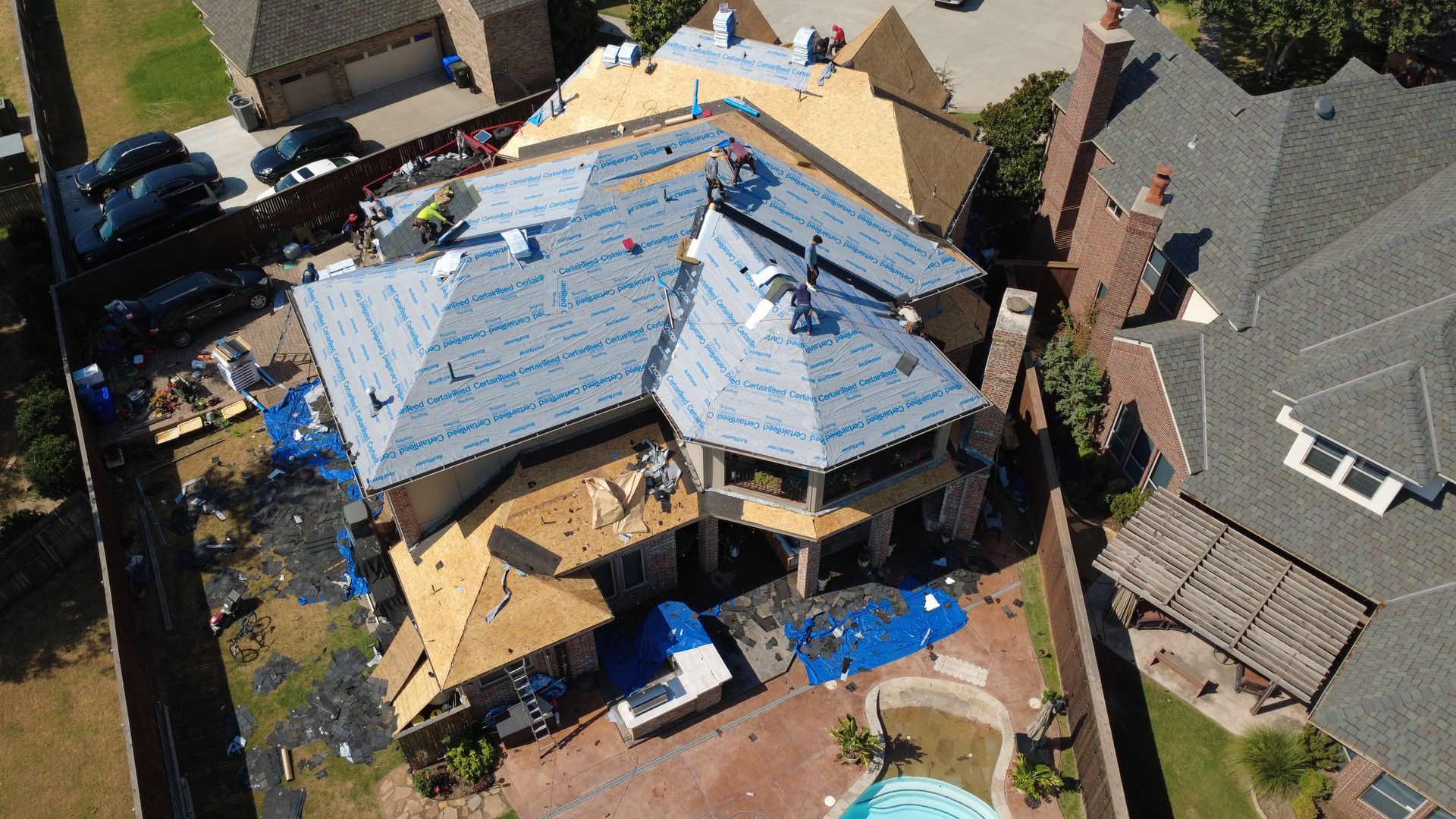
Why Waterproofing Failures Happen and How to Stop Them
Most residential waterproofing failures originate at transitions rather than field surfaces—the points where the roofing plane meets a vertical surface, penetration, or change in material are where movement, thermal cycling, and storm pressure concentrate stress. In Oklahoma, where temperature swings between winter lows and summer highs exceed 100 degrees Fahrenheit across the calendar year, sealants at these transition points experience expansion and contraction cycles that degrade adhesion over time regardless of initial application quality. Gray Feather Roofing focuses waterproofing treatment on these transition zones first, then evaluates field coverage based on substrate condition and storm history.
After waterproofing is completed, the interior attic surface stops showing new moisture staining during rain events, and existing stain areas remain static rather than expanding. Insulation that was compacted by moisture absorption begins to regain thermal performance as it dries, and the deck surface—previously exposed to cyclical wetting—returns to stable moisture content that preserves wood fiber integrity over subsequent seasons.
Timing matters for waterproofing in the Choctaw region: the post-hail period before the next storm sequence is the highest-value window for treatment, because compromised surfaces that go a full storm season without attention accumulate moisture damage that extends the repair scope well beyond the original breach points. Homeowners who address waterproofing within the season of damage discovery consistently avoid the secondary deck and structural costs that follow deferred treatment.
Questions Before Starting Your Project
Waterproofing projects raise specific questions about process, timing, and what the work actually covers. The following addresses what Choctaw homeowners most often ask before scheduling.
How is the moisture intrusion point actually identified during inspection?
The attic inspection traces moisture staining backward from its visible endpoint on the decking toward the roof surface above, using the stain gradient and direction to identify the most likely entry zone, which is then confirmed during exterior surface inspection at the corresponding location.
What membrane or sealant systems are used for roof waterproofing?
System selection depends on the substrate material, the type of intrusion point being addressed, and slope—low-slope areas typically require sheet membrane or fluid-applied systems with defined film thickness, while penetration flashings and transitions use compatible sealant products rated for the substrate combination being sealed.
Why is the three-to-six month post-storm window significant in Choctaw?
Hail events in this region typically occur in clusters during spring and early fall, and roofs left with granule displacement or flashing damage through a full storm season absorb moisture progressively across multiple rain events, meaning the deck condition at the end of the season reflects cumulative damage rather than a single-event loss.
When is waterproofing appropriate versus full roof replacement?
Waterproofing is the correct response when the deck and structural system remain sound and the failures are localized to specific penetration zones, transition points, or field areas—when decking shows widespread delamination or structural movement, replacement of the affected deck sections precedes waterproofing treatment.
What maintenance does waterproofing require after installation?
Sealed surfaces and membrane systems should be visually inspected after significant storm events to confirm edge adhesion and surface integrity remain intact, and penetration sealants at pipe boots and flashings benefit from periodic confirmation that thermal cycling has not introduced separation at the bonded edges.
Gray Feather Roofing maps moisture intrusion points through attic and exterior inspection before recommending any waterproofing treatment—call (405) 294-7639 to arrange a full assessment of your roof system's current waterproofing condition.